Who is "We" in "We the People"?
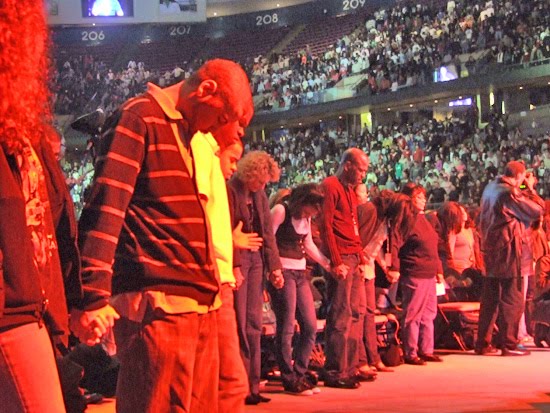
A question arises today concerning, “Who is ‘we’ in ‘We the People’?” The fight for true democracy and equality has been a timeless quest of the centuries, and each has his own view of what this means for our nation. People like Rosa Parks and Martin Luther King, Jr. fought because they whole-heartedly believed that all races had the right to the freedoms that the Constitution stated, with no exception due to ethnicity. Yet another activist group fought for women’s rights in the early 1900’s, professing that women should be granted the right to vote and a say in how the nation was governed. These suffragettes believed that the Constitution was not gender-specific, and should not inhibit an American from having their beliefs built into the structure of the country. Not all activists fight for the rights of adults, but rather, fight for some who cannot speak for themselves. Norma McCorvey (commonly known as Jane Roe, in the Roe v. Wade argument) and Lou Engle are some who battle for the rights of unborn children all around the United States. They stand for the notion that unborn fetuses are not merely masses of tissue, but a living human being, which should be protected by the laws of the country and granted the freedoms guaranteed in our national documents; the ones America was founded on. That is, “LIFE, liberty, and the pursuit of happiness.”
Each of these was/is an advocate; one who is willing to put a voice to their beliefs and make a difference in our government. Beliefs held without corresponding action are worthless. Rosa Parks and Martin Luther King, Jr. fought for Civil Liberties, and by 1968, all forms of segregation were declared unconstitutional. Elizabeth Cady Stanton and Bell Sherwin saw women get their voting rights in 1920 with the Nineteenth Amendment. They stood up for who they thought deserved the rights of an American citizen, and I believe that same determination and passion will help us win the battle to stop murdering generations in the name of “choice”.
Personally, I stand behind the belief that all races and genders should be given the same rights by the Constitution, as well as those who have not yet been born. I believe it’s our obligation, even privilege, to speak for those who do not yet have a voice for themselves. This includes not only unborn children, but even the kids in our current education system. Things are being taught as fact that are only theory, and a very unstable one at that, and they’re programming the youngest of generations with a specific set of morals we do not all agree with. From the moment of conception, we are the people, and we deserve the rights the Constitution guarantees according to what WE hold to be true. Our forefathers set up a democratic government so that we would have the opportunity to speak out, and not be held under the oppression that so many suffered before us. It is not only our right, but our duty, to hold onto our beliefs and keep our nation operating in the best interest of the people.
Tuesday, March 17, 2009

Samsung Techwin America Scholarship Program
What do you think about technology advancements and how they will change the way we learn in the future. Is it for the better?
Human cloning has been a controversial topic for some time, and what was once a practically unfathomable notion has become a very real scientific quest. Although many so-called “advancements” in science today are met with many opposing views and opinions, including the issue of human cloning, I chose to focus on the moral perspective which opposes and the supporting secular view.
Some reasons why people encourage the cloning of humans are to recover a loved one, make a twin, infertility, improvement of the human race, to create “spare parts”, and to advance medical research. If live cells are frozen or kept in culture, they can be used for a clone, and a replication of the person is made. Someone who is infertile can, instead of using conceiving traditionally using sperm-and-egg, can make a baby clone of themselves. Hybrids could be created using premier DNA as well. An embryo could be formed for bone marrow and such, with a guaranteed match. For those who see no ethical dilemmas, it seems like a great idea. However, there is a huge chance of mutation and serious problems. Now, let’s look another side of the argument.
Many see human cloning as playing the role of God, and that we were never meant to tamper with the human life. Although many try to justify that the use of an embryo for things like bone marrow is acceptable, that life does not begin until birth, many more argue that life begins at conception. Congress also includes cloned individuals under the definition of a human embryo, not exclusively if a human is conceived inside a woman from a sperm and an egg. Conclusively, cloned and traditional organisms are indeed human embryos, and should be valued as human life. Therapeutic cloning proposes that an embryo be generated only to be used then killed. Others say that it is unnecessary, and really does not have the amazing results that the opposition proposes.
It is important to mention that there are all kinds of views, including combinations of the ones mentioned above. I, personally, believe that human cloning is wrong in every respect, and we do not have the right to produce people outside of the way God intended. That is, sexual intercourse in a committed marriage relationship between a man and a woman, resulting in a human life. I believe that from conception on, that life should be valued and protected by law, and not for used solely for the benefit of others. Some may call that idealistic, but it’s the way I truly believe that God set up for us based on biblical principles. I’m sure human cloning will be up for debate for quite a while, and new opinions will be formed based on any number of things, such as the media and moral and religious views. However it turns out, and which part of the debate succeeds in persuading the general public, be careful of what you believe and research things out yourself to form your own opinions.
Human cloning has been a controversial topic for some time, and what was once a practically unfathomable notion has become a very real scientific quest. Although many so-called “advancements” in science today are met with many opposing views and opinions, including the issue of human cloning, I chose to focus on the moral perspective which opposes and the supporting secular view.
Some reasons why people encourage the cloning of humans are to recover a loved one, make a twin, infertility, improvement of the human race, to create “spare parts”, and to advance medical research. If live cells are frozen or kept in culture, they can be used for a clone, and a replication of the person is made. Someone who is infertile can, instead of using conceiving traditionally using sperm-and-egg, can make a baby clone of themselves. Hybrids could be created using premier DNA as well. An embryo could be formed for bone marrow and such, with a guaranteed match. For those who see no ethical dilemmas, it seems like a great idea. However, there is a huge chance of mutation and serious problems. Now, let’s look another side of the argument.
Many see human cloning as playing the role of God, and that we were never meant to tamper with the human life. Although many try to justify that the use of an embryo for things like bone marrow is acceptable, that life does not begin until birth, many more argue that life begins at conception. Congress also includes cloned individuals under the definition of a human embryo, not exclusively if a human is conceived inside a woman from a sperm and an egg. Conclusively, cloned and traditional organisms are indeed human embryos, and should be valued as human life. Therapeutic cloning proposes that an embryo be generated only to be used then killed. Others say that it is unnecessary, and really does not have the amazing results that the opposition proposes.
It is important to mention that there are all kinds of views, including combinations of the ones mentioned above. I, personally, believe that human cloning is wrong in every respect, and we do not have the right to produce people outside of the way God intended. That is, sexual intercourse in a committed marriage relationship between a man and a woman, resulting in a human life. I believe that from conception on, that life should be valued and protected by law, and not for used solely for the benefit of others. Some may call that idealistic, but it’s the way I truly believe that God set up for us based on biblical principles. I’m sure human cloning will be up for debate for quite a while, and new opinions will be formed based on any number of things, such as the media and moral and religious views. However it turns out, and which part of the debate succeeds in persuading the general public, be careful of what you believe and research things out yourself to form your own opinions.
Americanism Essay Contest 2008-2009
What does the American flag mean to you?
Our country has been founded on the principles of our forefathers, the honorable men who were committed to establishing a country unlike any other; one that can be sustained and made to prosper. These were not the only men who made our country great. Soldiers are warriors who so faithfully serve with nobility far beyond imagination. They remain as the protectors of what the writers of the Constitution, the very founders of this nation, strived to put in place. The flag is far more than stars and stripes, or even a symbol of just another country. It remains as a beacon, a testament to the dedication of so many who have fought to make this nation what it is today. It speaks of our origins, and our future. The struggles of our past make the upcoming glories so much brighter. “United we stand.” This phrase captures the very essence of what the American people aspire to be. We want to stand, with all the boldness and courage that we possess, and be one voice - the voice of freedom, the voice of virtue. When Betsy Ross poured her time into the first U.S. flag, I wonder if she really knew what she was creating. With every stitch, a piece of the morals and impressive resiliency was symbolized. Our flag flies as the very heartbeat of our nation, a reminder of where we came from, the sacrifices, and a monumental future.
Our country has been founded on the principles of our forefathers, the honorable men who were committed to establishing a country unlike any other; one that can be sustained and made to prosper. These were not the only men who made our country great. Soldiers are warriors who so faithfully serve with nobility far beyond imagination. They remain as the protectors of what the writers of the Constitution, the very founders of this nation, strived to put in place. The flag is far more than stars and stripes, or even a symbol of just another country. It remains as a beacon, a testament to the dedication of so many who have fought to make this nation what it is today. It speaks of our origins, and our future. The struggles of our past make the upcoming glories so much brighter. “United we stand.” This phrase captures the very essence of what the American people aspire to be. We want to stand, with all the boldness and courage that we possess, and be one voice - the voice of freedom, the voice of virtue. When Betsy Ross poured her time into the first U.S. flag, I wonder if she really knew what she was creating. With every stitch, a piece of the morals and impressive resiliency was symbolized. Our flag flies as the very heartbeat of our nation, a reminder of where we came from, the sacrifices, and a monumental future.
Subscribe to:
Comments (Atom)